The Gold Standard in Hair Regrowth
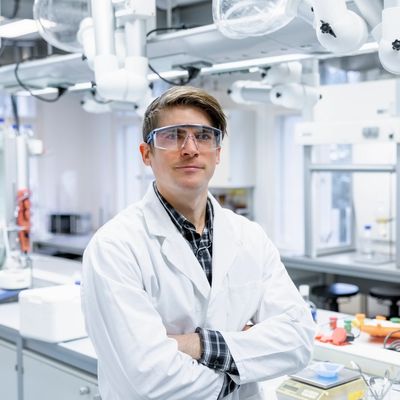
Hair growth is governed by multiple biological pathways, including follicular cycling, hormonal signalling, blood supply, and scalp health. OptiOptu formulations are developed using ingredients supported by peer-reviewed human clinical evidence, with preference given to randomised controlled trials (RCTs) and long-term outcome data.
Below we summarise the highest-quality available evidence for each active ingredient, considering data across both men and women where applicable.
Evidence Supporting Ingredients for Optimal Hair Growth
Topical Minoxidil
Strength of Evidence: High
Topical minoxidil is the most extensively studied topical treatment for pattern hair loss and is supported by robust, long-duration randomised controlled trials in both men and women.
Evidence overview
High-quality RCTs demonstrate that topical minoxidil:
- Increases non-vellus hair count compared with placebo
- Shows a clear dose–response relationship, with 5% formulations outperforming lower strengths
- Produces clinically meaningful improvement in both male androgenetic alopecia and female pattern hair loss
These findings have been replicated across large populations with study durations aligned to the hair growth cycle (typically 24–48 weeks).
Our Pharmacist's Interpretation:
The evidence supports topical minoxidil as a foundational treatment option for pattern hair loss in adults, with demonstrated benefit across sexes when used consistently.
Key references
- Olsen EA et al. J Am Acad Dermatol. 2002.
- Olsen EA et al. J Am Acad Dermatol. 2007.
- Blume-Peytavi U et al. J Am Acad Dermatol. 2011.
Topical Finasteride
Strength of Evidence: Moderate to High (population-dependent)
Finasteride acts by reducing the effects of dihydrotestosterone (DHT) at the hair follicle, a key driver of follicular miniaturisation in androgenetic alopecia. Topical formulations have been developed to localise scalp activity while limiting systemic exposure.
Evidence overview
Phase II–III randomised, double-blind, placebo-controlled trials in men demonstrate that topical finasteride:
- Improves target-area hair count compared with placebo
- Reduces scalp DHT with substantially lower systemic DHT suppression than oral finasteride
Evidence in women is more limited due to reproductive safety considerations and trial exclusion criteria rather than lack of biological plausibility. The underlying androgen-mediated mechanism is not sex-specific, and topical delivery allows dose localisation in carefully selected adult women under clinical supervision.
Our Pharmacist's Interpretation:
Topical finasteride is supported by high-quality clinical evidence in men and has conditional, population-specific relevance in women, reflecting differences in trial inclusion rather than absence of effect.
Key references
- Piraccini BM et al. J Eur Acad Dermatol Venereol. 2022.
- Caserini M et al. Clin Drug Investig. 2014.
Topical Tretinoin
Strength of Evidence: Moderate (adjunct role)
Topical tretinoin is not primarily a hair growth agent. Its role relates to epidermal turnover, follicular penetration, and enhancement of topical delivery, particularly when combined with minoxidil.
Evidence overview
Randomised controlled trials indicate that:
- Adding low-dose tretinoin to topical minoxidil may enhance clinical response
- Benefits are most evident in combination therapy rather than monotherapy
While most RCTs have been conducted in men, tretinoin’s pharmacological effects on follicular keratinisation and scalp penetration are not sex-dependent, supporting cautious adjunctive use in women where tolerated.
Our Pharmacist's Interpretation:
Topical tretinoin is best supported as an adjunctive ingredient, used to enhance responsiveness rather than as a standalone regrowth treatment.
Key references
- Shin HS et al. Am J Clin Dermatol. 2007.
- Kligman AM et al. Arch Dermatol. 1986.
Evidence at a Glance
What the evidence shows:
- Minoxidil: Strong, replicated RCT evidence in both men and women.
- Finasteride (topical): High-quality male RCTs with reduced systemic exposure; selective relevance in women.
- Tretinoin: Moderate evidence as an adjunct to enhance topical response.
Overall strength of evidence:
High (minoxidil) | Moderate–High (finasteride, population-dependent) | Moderate (tretinoin adjunct)
Overall Scientific Summary
When assessed using the highest-quality randomised controlled evidence:
- Topical minoxidil has the most consistent and sex-inclusive clinical support and forms the foundation of topical hair loss management.
- Topical finasteride addresses androgen-mediated follicular miniaturisation and is supported by robust male RCTs, with carefully selected relevance in women.
- Topical tretinoin enhances follicular delivery and responsiveness when used appropriately as part of a combination approach.
The evidence supports a multi-pathway, topical strategy that targets follicular stimulation, hormonal signalling, and scalp-level delivery rather than relying on a single mechanism alone.
Medical & Regulatory Notice
This information is based on peer-reviewed scientific literature and is provided for educational purposes only. Individual response varies. Treatments should be considered as part of a personalised consultation and are not intended to diagnose, treat, cure, or prevent disease.
Copyright © 2024 OptiOptu - All Rights Reserved.
